


October 20, 2026
FORS Attorneys Secure Confidential Settlement for Diner Burned by Liquid Nitrogen Dessert at Miami Restaurant
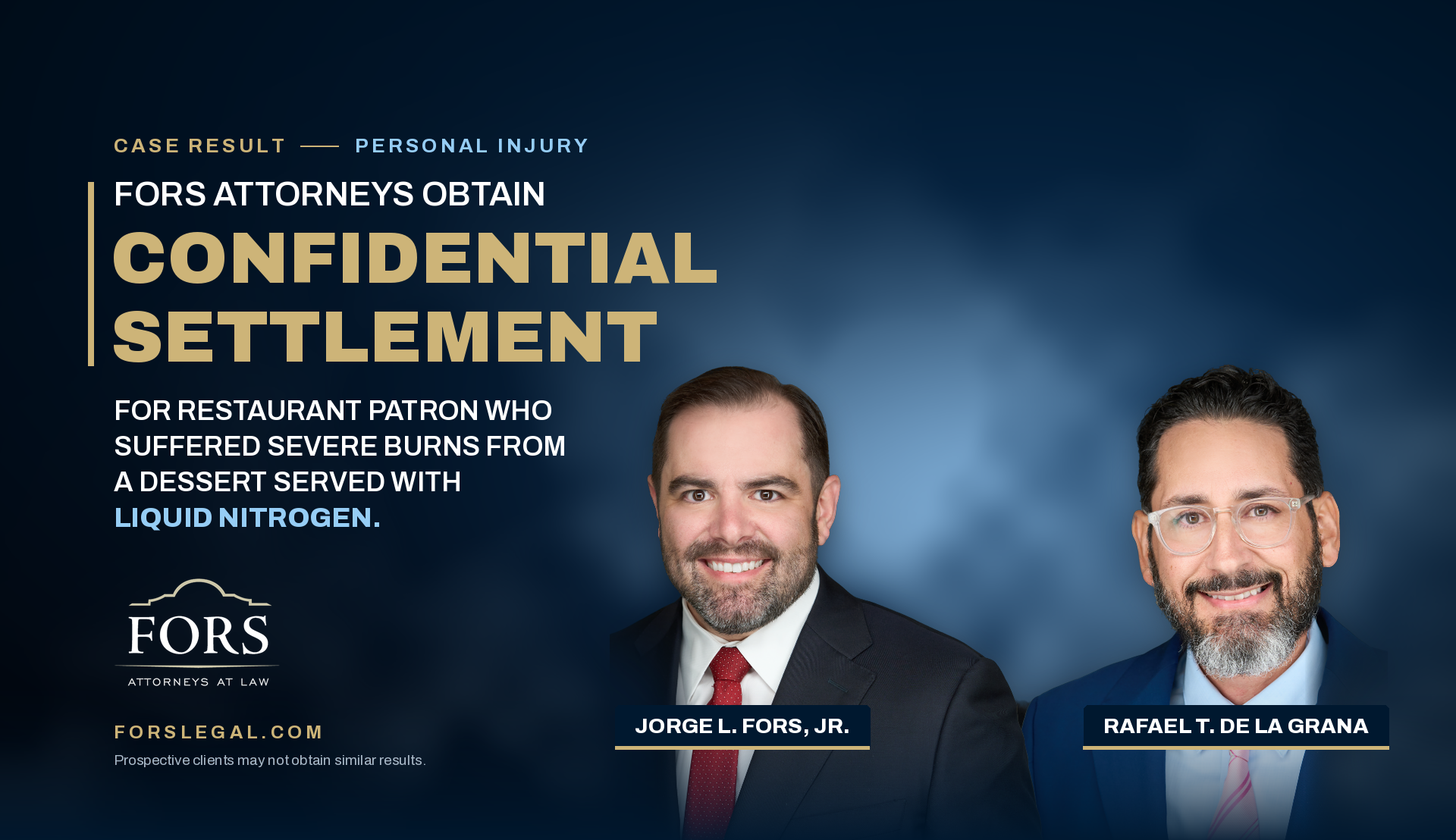
CORAL GABLES, Fla., October 2026. FORS attorneys, Jorge L. Fors, Jr. and Rafael T. De La Grana, secured a confidential settlement for a Miami-Dade woman who suffered cryogenic burns while dining at a Miami restaurant.
What Happened
According to the complaint filed by FORS in January of this year, the client ordered a dessert from the menu, presented tableside with liquid nitrogen, the ultra-cold liquid restaurants use to create a dramatic cloud of vapor. As a server delivered the dessert, the liquid nitrogen spilled and came into contact with her, causing severe and painful burns. The defendants denied the allegations.
How the Case Unfolded
FORS filed suit in the Circuit Court of the Eleventh Judicial Circuit against four companies: the restaurant's operator, a dining group alleged to control its operations, and the two entities that owned and controlled the property. The complaint pleaded six theories: negligence, negligent training and supervision, premises liability, negligent failure to warn, negligent mode of operation, and strict liability for an abnormally dangerous activity.
The case went to mediation in May 2026, and it did not settle. The defendants then moved to dismiss the complaint. In June 2026, after the court denied the motion to dismiss, FORS went on the offensive in discovery, serving interrogatories and requests for production on all four defendants and setting the depositions of their corporate representatives and key witnesses. With that discovery underway and the case set for jury trial, the parties reached a confidential settlement.
"Liquid nitrogen makes for a memorable presentation, but it is an industrial cryogen, and a restaurant that brings it to the table has to handle it that way," said Jorge L. Fors, Jr. "Our client went out to dinner and left with burns. She deserved to be compensated, and the companies behind the restaurant needed to answer for what happened."
"We prepared this case for a jury from the day it was filed," said Rafael T. De La Grana. "We are glad our client can now put it behind her."
Liquid Nitrogen at the Table: What Florida Diners Should Know
Liquid nitrogen boils at about minus 320 degrees Fahrenheit. Restaurants and dessert shops use it to flash-freeze ice cream, chill cocktails, and produce the smoky effect behind "dragon's breath" style treats. In August 2018, the U.S. Food and Drug Administration warned consumers to avoid eating, drinking, or handling foods prepared with liquid nitrogen at the point of sale, immediately before consumption, because it can cause severe damage to skin and internal organs if mishandled or accidentally ingested, and its vapor can cause breathing difficulty.
What Florida Law Requires of a Restaurant
Under Florida law, a restaurant's customers are business invitees. The restaurant owes them two duties: to use reasonable care to keep the premises reasonably safe, and to warn of concealed dangers that it knows or should know about and that customers cannot discover through ordinary care. A restaurant is also generally responsible for the negligence of its employees acting within the scope of their employment. When a hazardous substance is brought to the table as part of the service, those duties reach how staff are trained to handle it, how it is served, and whether diners are warned.
More Than One Company May Be Responsible
Restaurants often operate through layers of companies: an operating entity, a management or hospitality group, and separate entities that own the real estate. Identifying each company and the role it played is an early and important step, because responsibility can extend beyond the name on the sign. In this case, four companies were named as defendants.
Deadlines and Fault
For negligence claims arising after March 24, 2023, Florida's statute of limitations is generally two years from the date of injury, down from four. Florida also now applies modified comparative negligence: with an exception for medical negligence claims, an injured person found more than 50 percent at fault for his or her own injuries recovers nothing. Evidence gathered early, such as photographs, the restaurant's incident report, receipts, and the names of staff and witnesses, often shapes how fault is allocated.
FORS attorneys represent individuals in personal injury and premises liability matters from the firm's office in Coral Gables.
Prospective clients may not obtain similar results. This article provides general information and is not legal advice.


